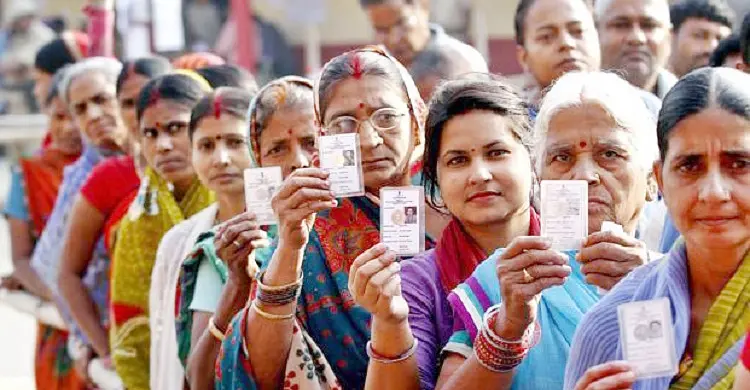
When religious polarization and divisive politics are on the rise across the country, the southern Indian state of Kerala has shown a different political culture. The recently announced Kerala Assembly Election 2026 results have won some seats and candidates, which proves that even today in Kerala people judge candidates not by their religion. Rather, he judges on the basis of ideals, principles and deeds.
Analyzing the results of this election, four paradigmatic images of communal harmony emerge. Out of which the center of Thavanur in Malappuram is known to be a Muslim majority area (about 90 percent). The seat was won by Congress candidate VS Joy, who is a Christian by religion. He defeated the well-known Muslim face of LDF. To KT Jalil. This proves that the voters have prioritized the merit of the candidate over the religious identity.
The opposite picture was seen in the Kochi centre. Congress’s Mohammad Shias won from this predominantly Christian constituency. He defeated incumbent MLA and representative of the Christian community, KJ Maxey.
Congress’s Sandeep Warrier won the Muslim-dominated Trikkaripur constituency. who is an upper caste Hindu. He lost to LDF’s popular Muslim candidate VPP Mustafa. This verdict of Muslim voters proves that job evaluation is the main language of politics there.
Similarly, IUML’s Abdul Gafoor won from the Hindu-majority Kalamassery seat. He defeated the dominant Hindu candidate of the LDF.
According to election analysts, this result in Kerala is not just a change of power. Rather, it is a powerful social message. Where politics could not be locked into a “Hindu vs Muslim” equation. This awareness and non-communal outlook of voters is the real ‘Kerala story’. Which can be a bright inspiration for the entire India.
This political culture of Kerala is a reminder that development and public service should be the criteria for electing representatives in a democracy, not a religious wall.